
I was obviously not alive in 1917 and my first exposure to this poster was not in the context of being recruited for the military. I’m not even sure where the first place I saw it was. It was likely in some form of advertising or pop culture. Once I learned more about its history it began to feel a little strange to me that we as a culture are still to this day so receptive to a propaganda piece. Propaganda generally has a pejorative connotation yet here we are using it to sell things and make people laugh. Why is that?
Here are a few responses from a survey question asking people if they have seen this poster re-created in any other form, perhaps parody or advertising. I have included some AI generated images based on the descriptions to give you an idea of what they may have looked like.
After doing a little research I feel that the re-use of this poster is many times to communicate a message in opposition to the creator of the propaganda (the government), or in a humorous manner. For example, while by no way an unpatriotic brand, Ben and Jerry’s is not commonly associated with military recruitment or supporting war. However, in 1994 they ran a humorous ad campaign and CEO search based on this poster. They used an image of founders Ben Cohen and Jerry Greenfield “posing as Uncle Sams in imitation of the old Army recruiting poster and pointing their forefingers straight at” the reader (Chicago Tribune). To this day both large and small companies can frequently be found incorporating Uncle Sam into their advertising, take for example this 2024 Instagram post from a car dealership in Texas.
However, there are also instances where it has been used in a manner that seems very on the nose and consistent with its original intent. Take for example Anduril - an AI based national defense firm. If you scroll to the bottom of this page https://www.anduril.com/ you will see an image of Uncle Sam right next to another slightly altered propaganda poster “The Grind That’ll Win”. For this company, using this type of propaganda art work fits their brand and communicates support for national defense. War propaganda posters could be in fact considered to be the “first true defense brand narratives, shaping how entire nations understood their role in the war effort and embedding lasting cultural symbols that outlived the conflict itself” (Viktor, https://bbdirector.com/brand-id-and-development/wwii-propaganda-defense-branding/). It makes a lot of sense why today’s national defense companies would want to reuse these images.
It also still works for the US government, so much so that the 1917 poster was re-used through multiple wars. It was also modified to match the look and feel of the Rosie the Riveter poster during World War II. A majority of survey participants said that they feel the Rosie poster is actually the more famous of the two. The government also uses it as a parody for other real campaigns such as Smokey the Bear. It’s big business for the government too - for fiscal year 2017 $575 million was requested in funds to improve advertising for military recruitment (https://www.gao.gov/products/gao-16-396) - being able to use images that already evoke emotions certainly reduces costs of having to start campaigns from scratch.
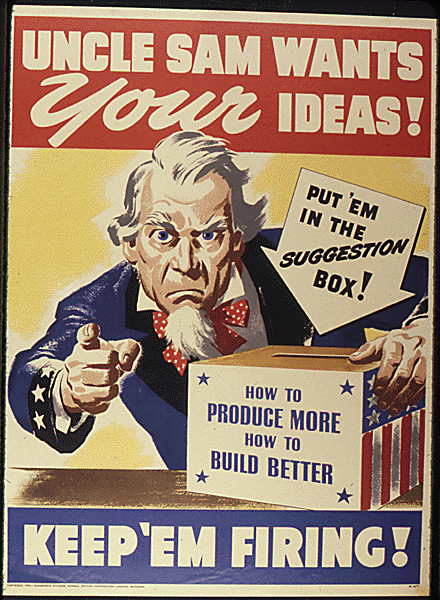

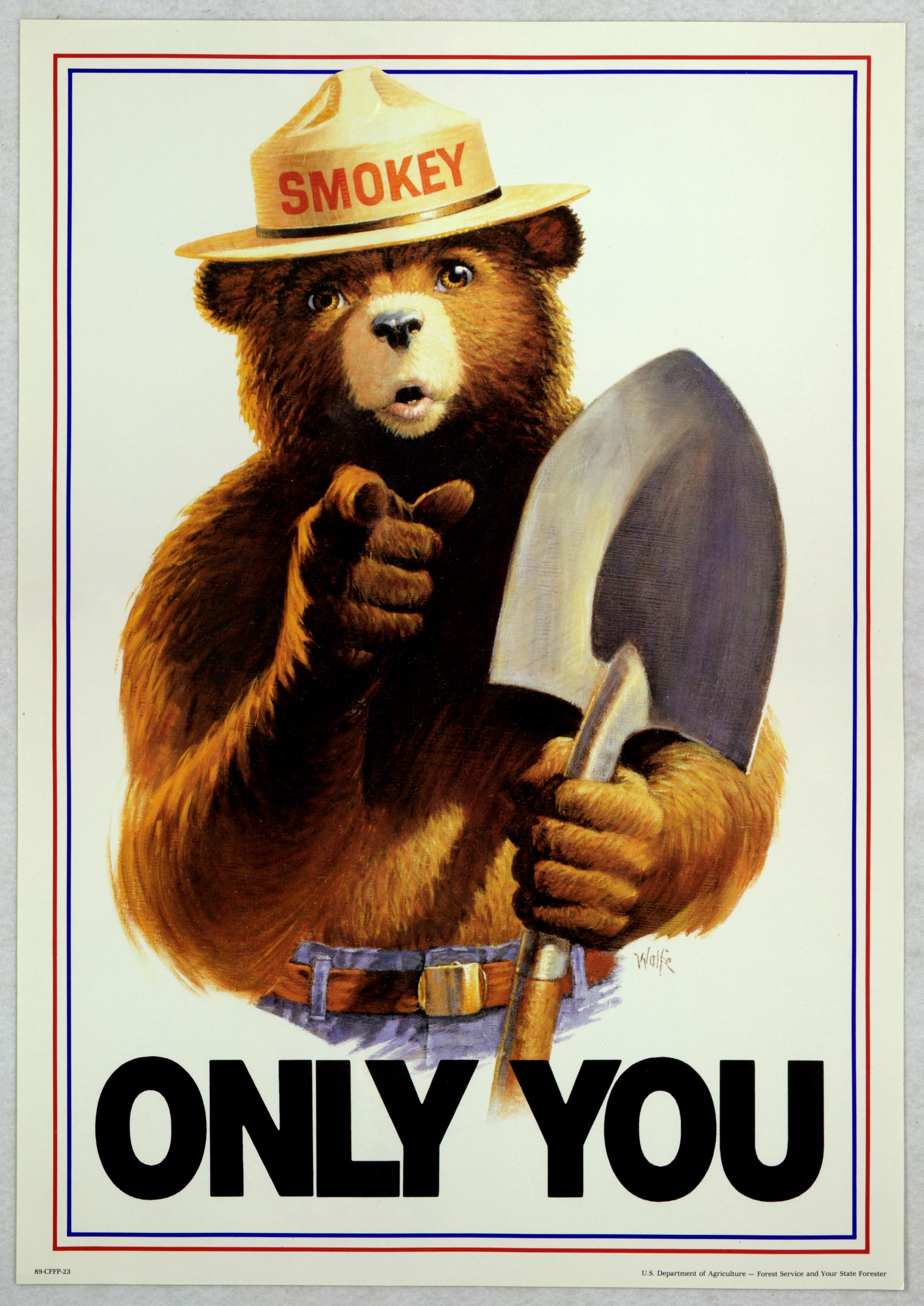
Reduced costs might also be a reason for the popularity of using government produced propaganda in commercial advertising. The image is in the public domain and much of the work has been done in terms of recognition and emotional manipulation. The vintage elements of the poster, such as the attention grabbing large bold text, simplicity, and signature style make this a prime piece to re-work into modern advertising while still being able to capitalize on the appeal of nostalgia. (https://www.invaluable.com/blog/elements-of-vintage-advertising/)
In conclusion it seems that successful propaganda can have a lot of mileage across many platforms. This Uncle Sam poster has paid off for both the original creator, the US government, but also for artists, advertisers, and humorists. It has moved beyond propaganda and found a comfortable place within our mainstream culture.
Bibliography
Anduril. “Transforming U.S. Defense Capabilities with Advanced Technology.” Accessed March 30, 2026. https://www.anduril.com/.
Christian Science Monitor. “Propaganda Artists Give Uncle Sam a Makeover.” n.d. Accessed March 29, 2026. https://www.csmonitor.com/2003/0404/p18s01-alar.html.
Daniel, John and Charles Houle, Larry Dunst, Larry Dunst, Murray Smith, Steve Horn, and Darien House Inc. I Want Out. 1971. Colour offset lithograph. Victoria & Albert Museum Prints, Drawings & Paintings Collection. https://collections.vam.ac.uk/item/O75555/i-want-out-poster-daniel-john-and/.
“‘Everybody’s Uncle Sam’ (May 15, 1995) - Library of Congress Information Bulletin.” Accessed March 30, 2026. https://www.loc.gov/loc/lcib/9510/unclesam.html.
Flagg, James Montgomery. I Want You for U.S. Army: Nearest Recruiting Station. January 1, 1917. Graphic. Library of Congress Prints and Photographs Division Washington, D.C. 20540 USA http://hdl.loc.gov/loc.pnp/pp.print, POS - US .F63, no. 9 (C size) [P&P] POS - US .F63, no. 9a another copy [P&P] POS - US .F63, no. 9b another copy. https://www.loc.gov/resource/ppmsca.50554/.
How WWII Propaganda Created the First Defense Brand Narratives - BB Director. A&D Branding. September 17, 2025. https://bbdirector.com/brand-id-and-development/wwii-propaganda-defense-branding/.
“I WANT THIS JOB: A COLD, CALCULATED BID FOR LIFELONG BLISS – Chicago Tribune.” Accessed March 30, 2026. https://www.chicagotribune.com/1994/06/23/i-want-this-job-a-cold-calculated-bid-for-lifelong-bliss/.
Instagram. “La Casita Used Cars on Instagram: ‘💰🚗 Not Planning to Purchase from Us? That’s Okay! We’ll Still Buy Your Car! Receive a 10-Minute Appraisal and Get the Best Possible Price. Find Your Closest Casa Dealership or Discover More Here: Https://Www.Lacasitausedcars.Com/El-Paso-Tx-Sell-Your-Car #BestPriceOffered #NoStringsAttached #LaCasitaUsedCars #GetApprovedToday #LaCasitaGetsYouApproved.’” August 17, 2024. https://www.instagram.com/lacasitausedcars/p/C-xZzoet2PE/.
Office, U. S. Government Accountability. “DOD Advertising: Better Coordination, Performance Measurement, and Oversight Needed to Help Meet Recruitment Goals | U.S. GAO.” Accessed March 31, 2026. https://www.gao.gov/products/gao-16-396.
Office, U. S. Government Accountability. “Uncle Sam Wants YOU! DOD Advertising in the Online Age | U.S. GAO.” Accessed March 30, 2026. https://www.gao.gov/blog/2016/09/20/uncle-sam-wants-you-dod-advertising-in-the-online-age.
Office for Emergency Management. War Production Board. (01/1942 - 11/03/1945). We Can Do It! Records of the War Production Board. 1942–1943. 179-WP-1563. National Archives at College Park - Still Pictures. https://catalog.archives.gov/id/535413.
Office for Emergency Management. War Production Board. (01/1942 - 11/03/1945). Uncle Sam Wants Your Ideas! Keep ’Em Firing. Records of the War Production Board. 1942–1943. 179-WP-395. National Archives at College Park - Still Pictures. https://catalog.archives.gov/id/534244.
“Uncle Sam: The Man and the Meme.” September 13, 2013. https://americanhistory.si.edu/explore/stories/uncle-sam-man-and-meme.
U.S. Forest Service Smokey Bear Collection. “Only You.” 1989. https://www.nal.usda.gov/exhibits/speccoll/items/show/459.
“6 Effective Elements of Vintage Advertising (That Still Work).” Invaluable, February 5, 2019. https://www.invaluable.com/blog/elements-of-vintage-advertising/.

